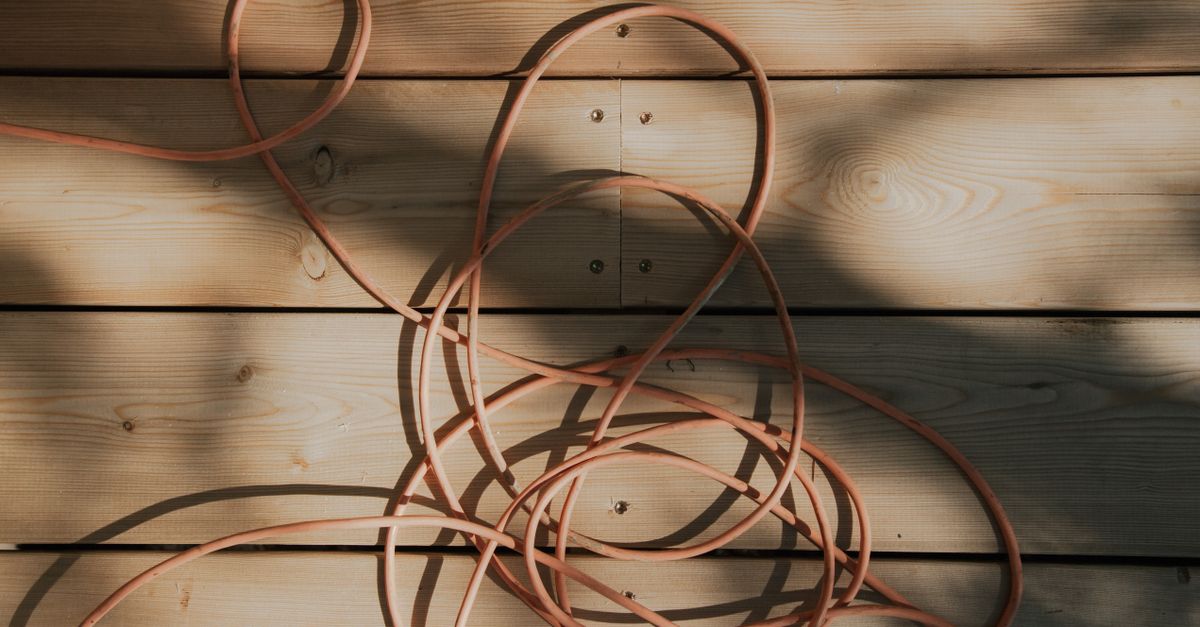
Every spring, as the garden beckons, I see countless frustrated gardeners wrestling with their hoses. It’s a scene I know all too well: you pull the hose out, ready to water those thirsty seedlings, and within a few feet, it’s a coiled mess, stubbornly kinking and stopping the water flow. Or worse, you drag it around a corner, and it snags on every rose bush and patio chair. For years, I just accepted this as an inevitable part of gardening, blaming cheap hoses or my own impatience. But after countless hours wasted untangling, and more than a few ruined plants from a sudden lack of water, I realized there had to be a better way. The truth is, most people overlook some fundamental factors that turn a simple watering task into an irritating chore. It’s not always about the hose itself, but how we use and store it.
Key Takeaways
- The internal memory of your hose, from how it was coiled at the factory, dictates its tendency to kink and tangle.
- Investing in a flat-lying, heavy-duty hose designed with internal reinforcement dramatically reduces kinking.
- Proper coiling techniques, like the over-under method, prevent hose memory issues and tangles.
- Strategic hose guides and reels fundamentally change how your hose navigates the garden, saving time and frustration.
The Invisible Culprit: Hose Memory and Manufacturing Coils
When you buy a new garden hose, it often comes tightly coiled in packaging. This initial coiling, often done haphazardly or in a way that prioritizes compact shipping over functional use, imprints a ‘memory’ into the hose’s material. Think of it like a spring: it wants to return to its original coiled state. This is, in my experience, the single biggest reason why hoses tangle and kink right out of the box, regardless of how ‘heavy-duty’ they claim to be. The plastic or rubber compounds are simply trained to behave a certain way.
The mistake I see most often is people trying to fight this memory. They unroll it, use it, and then try to neatly coil it back up, only to find it resisting and forming those frustrating figure-eight kinks. What changed everything for me was understanding that you need to ‘train’ your hose to lay flat and coil properly from day one. If a hose is made from cheaper PVC, this memory is even more pronounced and harder to overcome. High-quality rubber or hybrid polymer hoses, while initially more expensive, tend to have less severe factory memory and are more pliable, making them easier to retrain.
Actionable Insight: When you get a new hose, unroll it completely and let it sit in the sun for an hour or two. This warms the material, making it more flexible. Then, starting from the connection point, consciously train it to lie flat as you coil it for the first time using the ‘over-under’ method (more on that below). Don’t force it against its natural tendency; instead, guide it. This initial effort will save you months, if not years, of frustration.
The Overlooked Power of Proper Coiling Techniques
Most people just wind their hose around their arm or haphazardly throw it onto a hook. This creates inconsistent loops and twists, constantly reinforcing bad ‘hose memory’ and setting you up for a tangled mess the next time you use it. The key to a kink-free experience lies in a technique professional stagehands and electricians have used for decades: the over-under coiling method.
This method isn’t just about neatness; it’s about physics. It creates alternating twists in the hose that naturally counteract each other, preventing the hose from developing internal torque that leads to kinking. When done correctly, the hose practically unrolls itself without effort.
In my own garden, switching to this method was a revelation. My 100-foot hose, once a nightmare, now deploys smoothly. It takes a little practice to get the rhythm right, but once you do, it becomes second nature. You’ll notice the hose naturally forms nice, even loops without fighting you.
Actionable Insight: Learn and consistently apply the over-under coiling method. To do this, hold the hose in one hand. With the other, create the first loop by passing the hose over your hand, then under your hand for the next loop, alternating as you go. Each ‘under’ loop involves a slight rotation of your wrist, allowing the hose to untwist itself. This effectively removes the torsional stress that leads to kinking. Store the neatly coiled hose on a proper reel or a large, open hanger, not tightly wrapped around a small hook.
Subpar Hose Construction and Material Choices
Not all hoses are created equal, and the market is flooded with options that prioritize low cost over durability and function. Many ‘lightweight’ or ‘budget’ hoses are made from thin PVC that kinks under its own weight, especially when filled with water. They often lack sufficient internal reinforcement or have a small diameter that easily collapses. This isn’t just an inconvenience; it restricts water flow, reduces pressure, and shortens the lifespan of the hose itself.
I’ve made the mistake of buying cheaper hoses to save a few dollars, only to replace them every year or two. What actually works is recognizing that a hose is a long-term investment. Look for hoses with multiple plies (layers) and a braided or mesh reinforcement within the wall. Hybrid polymer hoses are a fantastic sweet spot – they’re lighter and more flexible than traditional rubber but far more durable and kink-resistant than PVC.
Actionable Insight: Don’t skimp on hose quality. Look for terms like ‘heavy-duty,’ ‘kink-resistant’ (with a specific guarantee, not just a vague claim), ‘hybrid polymer,’ or ‘rubber.’ Check the burst pressure rating; higher numbers indicate a more robust hose. A hose with a larger internal diameter (e.g., 5/8 inch instead of 1/2 inch) also allows for better water flow and is less prone to kinking from pressure fluctuations. Expect to pay more upfront, but consider it an investment in years of frustration-free watering.
Unmanaged Pathways and Obstacles
Even the best hose, coiled perfectly, will tangle and snag if your garden pathways are unmanaged. Sharp corners, flowerbeds without clear edges, patio furniture, and even dense shrubbery become snagging points. When a hose gets caught, the natural reaction is to pull harder, which inevitably leads to kinking, damaging plants, and stressing the hose connectors.
This was a major issue in my own sprawling garden. My hose would constantly get hung up on the corner of the raised beds or wrapped around the bird bath. What changed everything for me was strategically thinking about the hose’s path, not just its destination. Simple solutions can make a world of difference in guiding the hose smoothly through your outdoor space.
Actionable Insight: Install hose guides at key pivot points in your garden, especially around corners, delicate plantings, or heavy patio furniture. These can be decorative stakes, buried conduit, or even strategically placed heavy rocks. For long runs, consider an automatic hose reel that retracts the hose evenly and smoothly, or a cart reel that allows you to easily move the entire hose setup without dragging. A well-placed hose reel or cart also doubles as a proper storage solution, keeping the hose off the ground and out of the sun, further extending its life.
Neglecting Proper Storage and Environmental Factors
Leaving a hose coiled on the ground, baking in the summer sun, or freezing on a winter night is a surefire way to shorten its lifespan and exacerbate kinking issues. Extreme temperatures degrade the material, making it brittle and less flexible. Sunlight’s UV rays specifically break down plastics and rubber over time, leading to cracking and stiffness.
I used to leave my hose out year-round, thinking it was just a tough piece of equipment. But I noticed it became incredibly stiff and prone to kinking after just one season of neglect. What changed everything for me was realizing that proper storage isn’t just about tidiness; it’s about preserving the hose’s integrity and flexibility.
Actionable Insight: Invest in a proper hose reel or a large wall-mounted hanger. After each use, drain any remaining water from the hose and coil it using the over-under method. During winter, disconnect the hose, drain it completely, and store it indoors in a cool, dry place like a shed or garage. This simple routine will keep your hose supple, prevent cold-weather kinking, and dramatically extend its life, making it a joy to use year after year.
Frequently Asked Questions
Q: Why does my hose kink even if it says ‘kink-free’?
A: Many hoses are advertised as ‘kink-free,’ but this claim is often marketing hyperbole. The term usually means it’s less prone to kinking than cheaper alternatives, not completely immune. Internal hose memory from packaging, improper coiling techniques, and sharp turns in your garden can still cause even a good quality hose to kink. Look for hoses with actual internal reinforcement and a guarantee, and always use proper coiling methods.
Q: Is there a specific type of hose material that’s truly kink-resistant?
A: While no hose is 100% kink-proof under all conditions, hybrid polymer hoses offer an excellent balance of flexibility, durability, and kink resistance. They often combine the best qualities of rubber (flexibility, weather resistance) and PVC (lightweight, affordability) without the extreme kinking tendencies of pure PVC or the heavy weight of pure rubber. Look for ones with multi-ply construction and braided reinforcement.
Q: How do I store a long hose (100ft+) to prevent tangles?
A: For long hoses, a hose reel cart or a wall-mounted retractable reel is essential. The key is to coil it properly as you retract it (using the over-under method if coiling manually onto a cart). This keeps the hose off the ground, protects it from UV damage, and ensures it’s ready for smooth deployment the next time. Avoid small hooks that create tight, uneven coils.
Q: Can I fix a hose that already has bad ‘memory’ and kinks easily?
A: Yes, to some extent. Fully unroll the hose on a warm, sunny day and let it relax for several hours. This helps the material become more pliable. Then, starting from the spigot connection, carefully re-coil the entire hose using the over-under method. Be patient and consistent. While it may not be as good as a new, properly trained hose, you can significantly improve its behavior.
Q: Are expandable hoses a good alternative to traditional hoses?
A: Expandable hoses are lightweight and compact, making them attractive for small spaces or occasional light watering. However, they are generally far less durable, prone to bursting, and often have lower water pressure. They are also notoriously difficult to repair if punctured. For serious gardening or regular use, I always recommend a high-quality traditional hose for its longevity and reliability.
In the end, a garden hose shouldn’t be a source of frustration. By understanding its ‘memory,’ using proper coiling techniques, investing in quality, managing your garden pathways, and storing it correctly, you can transform it from a tangled mess into a reliable tool that smoothly supports your green thumb endeavors. It’s a small change with a surprisingly significant impact on your gardening peace of mind.