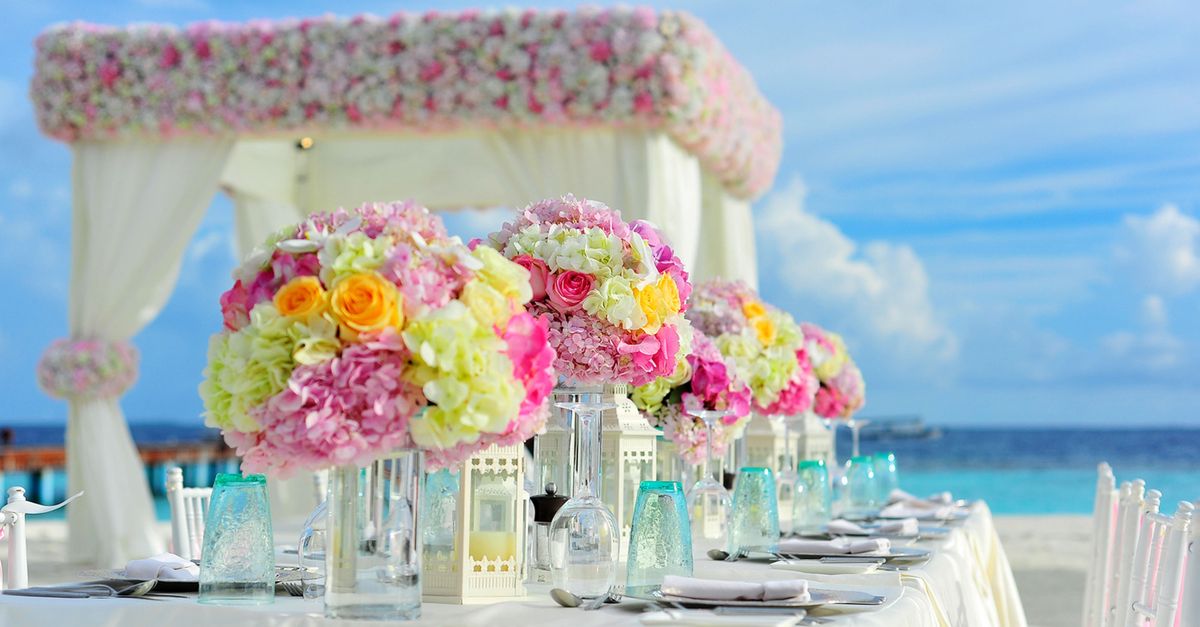
Summer is supposed to be the easiest season for a beautiful table — long daylight, fresh produce, everyone gathering outdoors. And yet I get more questions in June and July about tables that “look fine but feel flat” than almost any other time of year. Clients set the table with their nice plates, put a bowl of lemons or a small bouquet in the center, and the whole thing still reads as a slightly dressed-up version of a normal Tuesday dinner rather than an occasion. The problem, I’ve found, is that most summer table setting advice focuses entirely on the centerpiece and completely ignores the elements that actually signal “gathering” to the eye and the senses: layering, asymmetry, and things that move.
A truly inviting summer table isn’t more decorated than a nice everyday table. It’s decorated differently — with attention to height variation, informal texture, and small sensory details that a matched place-setting simply can’t provide on its own.
Key Takeaways
- A single centered centerpiece reads as formal and static; scattered, asymmetrical elements running the length of the table feel more celebratory and summery.
- Mixing formal elements (real glassware) with informal ones (linen napkins, a woven runner) creates the relaxed-but-special tension that defines a great summer table.
- Anything with movement — candle flame, greenery, loose flowers — reads as more alive than a perfectly still arrangement.
- Lighting after dusk does more emotional work at a summer table than any daytime centerpiece choice.
Ditch the Single Centerpiece for a Running Landscape
The instinct to place one nice centerpiece in the exact middle of the table is borrowed from formal, indoor dining, where a single focal point makes sense because the table is often viewed from a fixed seat with a clear sightline. A long summer table, especially outdoors, is viewed from all sides and often has people constantly reaching across it, which means a single centered piece frequently ends up awkwardly relocated within the first ten minutes anyway. Instead, professional stylists build what’s often called a “runner landscape” — a low, loose scattering of smaller elements running the length of the table rather than one dominant piece in the middle. This might mean three or four small bud vases with a single stem each, spaced unevenly along a runner, interspersed with a few citrus halves cut cut-side up, a scattering of fresh herbs like rosemary or mint sprigs, and a couple of low pillar candles. The asymmetry and lower profile mean guests can see and talk across the table easily, and the eye reads the whole arrangement as generous and easy rather than fussy and precious.
The Formal-Informal Tension That Makes a Table Feel Special
The most memorable summer tables I’ve styled all share a specific quality: they mix at least one genuinely formal element with several deliberately informal ones. Real glassware (not disposable, even for a casual backyard gathering) paired with linen napkins that are folded loosely rather than pressed into precise triangles. A beautiful ceramic serving bowl sitting directly on a rough woven jute runner instead of a pressed tablecloth. This tension — one nice thing elevating several relaxed things — is what separates “we made an effort” from either “everyday casual” or “stiff and formal.” The mistake I see most often is going all-in on one register: either everything is disposable and purely functional, or everything is matched and pressed to the point of feeling like a photo shoot nobody’s allowed to touch. Pick one or two elements to genuinely elevate — good glassware, cloth napkins, a nice board for cheese and fruit — and let everything else stay loose and unfussy.
Movement Reads as Alive; Stillness Reads as Staged
There’s a subtle but real difference between a table with candle flames flickering, loose herb sprigs that shift slightly in a breeze, and cut flowers with some natural bend to their stems, versus one with everything rigid, upright, and perfectly still. Movement, even subtle movement, signals life and spontaneity in a way that static perfection can’t. This is part of why perfectly symmetrical, tightly arranged floral centerpieces can sometimes feel more like a hotel lobby than a backyard gathering — nothing about them suggests anyone will actually touch or disturb the arrangement. For a summer table, I favor loose, slightly asymmetrical flower arrangements over tight, dome-shaped ones, real candles over battery-operated ones whenever safety allows, and fresh herbs left on their stems (which release scent when brushed against) rather than pre-chopped and hidden in food only. These small choices add sensory dimension — scent, flicker, gentle motion — that a static, symmetrical setup simply cannot replicate no matter how expensive the individual pieces are.
What Happens After Dusk Matters More Than the Daytime Setup
Most summer gatherings run past sunset, and yet most people plan their table styling entirely around how it looks in daylight, leaving lighting as an afterthought once it gets dark. This is a missed opportunity, because low, warm lighting after dusk does more to create atmosphere than almost any daytime styling choice. Layer your lighting the way you would indoors: a few low pillar or taper candles at table height for intimate glow, string lights overhead for ambient light that doesn’t compete with conversation, and if possible, a few lanterns or votives placed on nearby surfaces beyond the table itself so the light source doesn’t feel confined to one flat plane. The transition from a bright, cheerful daytime table to a warmly lit evening one is part of what makes a long summer gathering feel like a full occasion rather than just an early dinner that happened to run late.
Frequently Asked Questions
How do I keep a runner-style centerpiece from looking messy instead of intentional?
Keep every element at a consistently low height (nothing should rise more than a few inches above the plates, so sightlines stay open) and leave visible bare table or runner between each cluster of items. The looseness should be in the arrangement of groups, not in each individual grouping, which should still feel deliberately placed.
What’s an easy way to add movement without buying fresh flowers every time?
Fresh herb sprigs (rosemary, mint, basil) last far longer than most cut flowers, cost less, and provide the same gentle movement and, as a bonus, a pleasant scent when guests brush against them. A few sprigs in small glasses of water scattered along the table achieve most of the same effect as a floral arrangement.
Is it worth investing in real glassware for casual outdoor entertaining, or is that impractical?
A modest set of inexpensive but genuinely glass tumblers (not crystal, just real glass) makes a noticeably bigger difference than most people expect, and most casual patterns are inexpensive enough to not worry deeply about breakage. Reserve your finer stemware for indoor or lower-risk settings, and use simple durable glass outdoors.
How many candles does a table for eight actually need?
A good baseline is one candle per two guests, varied in height, clustered rather than evenly spaced. For a table of eight, that’s roughly four candles: two or three low votives scattered among your runner elements, plus one or two slightly taller pillars as height variation.
My outdoor space doesn’t have good ambient lighting options. What’s the minimum I need?
String lights are the highest-return, lowest-effort option if you have nothing else, since they provide broad ambient coverage without requiring individual candle maintenance throughout the evening. If string lights aren’t feasible, a cluster of battery-operated lanterns placed at varying heights around the seating area is a reasonable substitute.
Does the tablecloth or runner fabric actually matter, or is that overthinking it?
It matters more than people expect, mostly because of how it interacts with the informal-formal tension described above. A crisp white pressed tablecloth pushes the whole table toward formal, which can undercut the relaxed feeling you’re usually after in summer. A textured, slightly wrinkled linen runner over bare wood, or no runner at all over a nice wooden table, generally reads as more effortlessly summery than a fully draped, pressed cloth, even when the rest of the setting is identical.
A summer table that actually feels celebratory isn’t the one with the most expensive centerpiece — it’s the one with movement, asymmetry, a touch of formal-informal contrast, and lighting that carries the gathering past sunset. Try loosening your next centerpiece into a running landscape and layering in candlelight before dusk, and you’ll likely find the “occasion” feeling was a styling choice, not a budget one.